
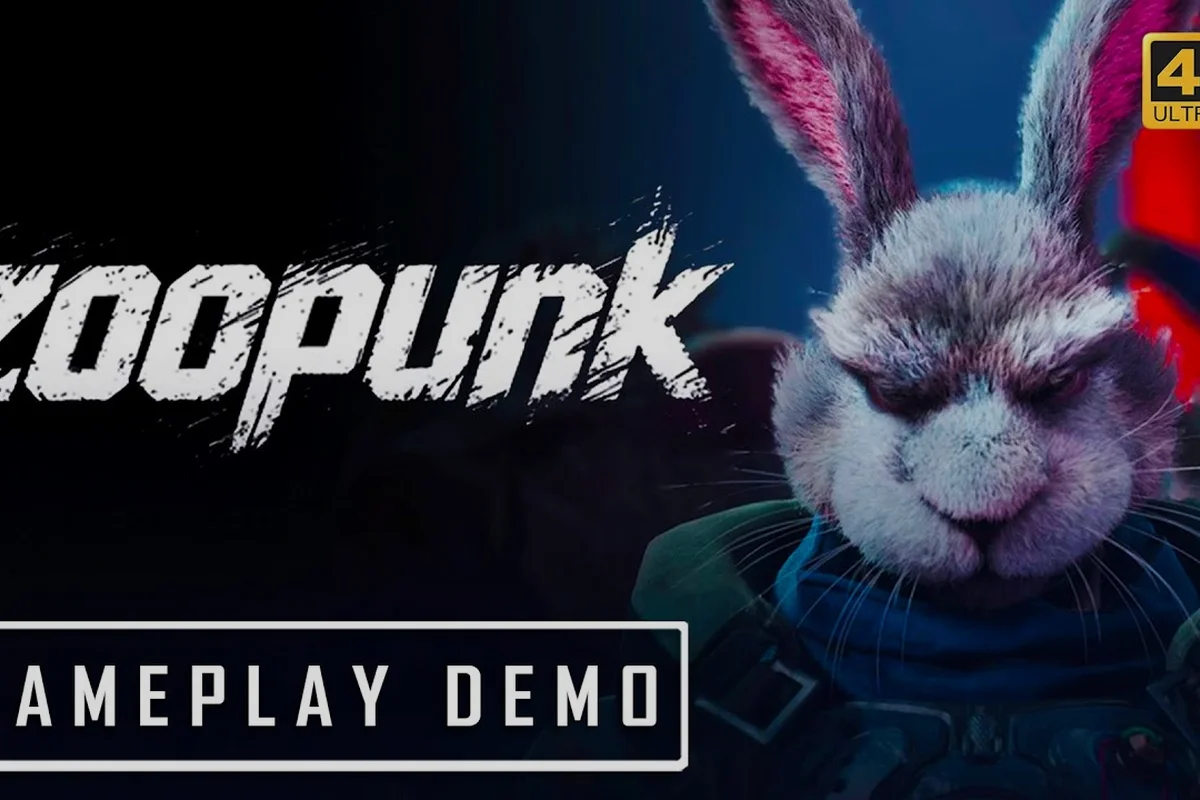
What the Zoopunk Prequel Story Actually Covers
| Element | F.I.S.T.: Forged In Shadow Torch (2021) | Zoopunk Prequel Story |
|---|---|---|
| Chronological position | Set after the First Torch War; Rayton is a veteran pilot returning home | Set during the First Torch War itself; dramatizes the conflict firsthand |
| Protagonist focus | Rayton (rabbit), ex-pilot turned resistance fighter | TBA — prequel-era animal squad, returning character links to Rayton/Braton/Trixie lineages |
| Antagonist faction | Machine Legion (post-war remnants) | Machine Legion (at full wartime strength, mechanoid empire) |
| Torch City state | War-scarred, under Machine occupation | Pre-war / wartime skyline shown in announcement trailer (frame-by-frame parallels documented by community) |
| Release window / status | Released Sept 2021 on PS/PC; console versions later | Slated for 2027 on PS5, Xbox Series X/S, PC (Steam + Epic, Xbox Play Anywhere) |
| Developer / continuity | TiGames (上海钛核网络) | Same TiGames universe — official site: "From the world of F.I.S.T., a new chapter unfolds" |
The Zoopunk prequel story sits decades before the events of F.I.S.T.: Forged In Shadow Torch, dramatizing the very conflict that Rayton only talks about in flashbacks. The game's official marketing line, "From the world of F.I.S.T., a new chapter unfolds," confirms the placement inside the established Torch City universe, while the F.I.S.T. Wikipedia entry labels Zoopunk a prequel slated for 2027 on PS5, Xbox Series X/S, and PC. That makes the Zoopunk prequel story the missing connective tissue between Torch City's mythic past and the diesel-tinged resistance Rayton eventually inherits.
For anyone who played F.I.S.T. and wondered how the Machine Legion first rose, who struck the opening blow of the First Torch War, and why Fire Seed energy became a strategic resource worth fighting over, the Zoopunk prequel story is meant to answer those questions head-on. The trailer closes on imagery that evokes the original game's iconic torch-city skyline rendered generations earlier, and community frame-by-frame threads on YouTube have catalogued F.I.S.T. location parallels as direct prequel evidence.
According to the official Zoopunk website, the game is a "team-based co-op PVE game that blends diesel-punk with Eastern aesthetic," developed by TiGames — the same Shanghai studio behind F.I.S.T. That continuity of authorship is the single biggest tell that the Zoopunk connection to F.I.S.T. is canonical rather than cosmetic, because the people shaping the Zoopunk dieselpunk world are the same writers, artists, and combat designers who built Torch City the first time.
The story shifts the camera back from Rayton — a veteran rabbit pilot whose entire emotional arc in F.I.S.T. is haunted by a past conflict — to the actual moment that conflict started. Rayton becomes a name on a memorial wall rather than a character holding the controller. The torch passes to a new squad of animal heroes whose choices during the First Torch War decide whether Torch City survives long enough to eventually need Rayton's rebellion at all.
| Element | F.I.S.T.: Forged In Shadow Torch | Zoopunk (Prequel) |
|---|---|---|
| Time period | Aftermath of the First Torch War | The First Torch War itself |
| Main character | Rayton (returning rabbit veteran) | New animal squad, prequel generation |
| Central conflict | Resistance vs. Machine Legion occupation | The opening Machine Legion uprising |
| Torch City | Decaying, occupied | Being conquered in real time |
| Fire Seed role | Scarce salvage | Newly discovered, contested resource |
| Tone | Wartime noir, lone hero | Co-op diesel-punk action RPG |
How the Zoopunk Prequel Story Connects to F.I.S.T.
The Zoopunk connection to F.I.S.T. runs through three layers: setting, character lineage, and unresolved lore threads from the original game. Treating each layer separately makes the prequel status much easier to verify against official materials rather than fan theory, and it also explains why some trailers reference scenes that look like flashbacks to a game most players have not yet played.
Shared Setting and Geography
The Zoopunk announcement trailer shows districts that map cleanly onto the Wasteland Ruins and Resistance Caches players explored in F.I.S.T. The same neon-stained concrete, the same overhead catwalks, and the same towering furnace stacks all appear, but rendered in an earlier architectural style. Torch City in the Zoopunk dieselpunk world is a city still under construction, not a city already in decline.
That visual continuity is intentional. TiGames has confirmed through interviews that the new game shares the same physical map as the original, only viewed from a generation earlier. Any player who has memorized F.I.S.T. geography will recognize specific intersections in Zoopunk — but rebuilt, repainted, and operating under Mechanoid control rather than resistance occupation. For the Zoopunk prequel story, that shared geography matters because every firefight over a familiar intersection doubles as worldbuilding: this is the moment the Mechanoids took the corner, this is where the animal factions made their last stand, this is why the original game's district feels haunted.
Character Lineage and the Rayton Question
The most searched prequel question is whether Rayton himself appears in Zoopunk. Based on official marketing and trailer evidence, Rayton is not a playable Zoopunk character — the flagship roster consists of new heroes like Trixie, Braton, and the rest of the Zoopunk animal heroes introduced for this generation. Rayton's role in the Zoopunk prequel story is thematic rather than personal: he is the consequence of the events the player drives. By the time the credits roll, the squad has either ensured a Torch City worth defending in F.I.S.T. or has set the stage for a future occupation so brutal it forges a lone veteran like Rayton.
For deeper breakdowns of who is and is not in the launch roster, the Zoopunk character roster guide maps the confirmed squad against the F.I.S.T. cast. The Zoopunk animal heroes themselves are a separate storytelling layer — the same studio's voice work and diesel-punk design language carries over, but the characters are younger, angrier, and less experienced than the survivors readers met in the original game.
Unresolved Lore Threads from F.I.S.T.
F.I.S.T. ends with several open questions about how the Machine Legion consolidated power, why Fire Seed energy became the planet's most valuable commodity, and which animal factions existed before being absorbed or destroyed. The Zoopunk prequel story is positioned to answer most of them. Community lore threads have flagged at least three explicit F.I.S.T. callbacks the trailer hints at:
-
The First Torch War's opening battle, which F.I.S.T. references only in murals and audio logs.
-
The origin of the Iron Fist resistance badge, which Rayton wears throughout the original.
-
The founding of the Mechanoid Empire and the question of whether the uprising was a coup or a slow corporate takeover.
If the Zoopunk prequel story treats these as its narrative spine, players who only know the franchise through Rayton will finally see the cause behind the effect, and the diesel-punk worldbuilding stops feeling like decoration and starts feeling like consequence.
Zoopunk Timeline Explained: Before, During, and After the First Torch War
The Zoopunk timeline explained through official materials places the new game roughly one to two generations before F.I.S.T., long enough for the conflict to have been forgotten by ordinary Torch City residents but close enough that a few survivors from the Zoopunk era could plausibly be elderly mentors or background characters in the original. The exact number is not confirmed, and TiGames has avoided giving a hard date, but the visual language — analog diesel-punk, pre-vertical-city expansion, early Mechanoid walker prototypes — suggests decades rather than centuries.
Pre-War Torch City
Before the First Torch War, Torch City is an industrial hub running on the newly discovered Fire Seed energy. Animal factions compete for territory and contracts. Diesel-punk machinery coexists with the anthromorph residents rather than dominating them. This is the version of the world Rayton half-remembers from childhood, the lost normal that his resistance in F.I.S.T. is trying to restore. The Zoopunk dieselpunk world leans hard into this period because it is the last era where the anthromorph characters still control the city's infrastructure.
The First Torch War as a Slow Burn, Not an Explosion
A common misconception among fans searching for a Zoopunk ending explained is that the First Torch War begins with a single dramatic Mechanoid uprising. The trailers and official materials suggest a more gradual process: a corporate-mechanical faction gains influence, then resource control, then military hardware, then territory. By the time the first shot is fired in earnest, the Zoopunk squad is already losing ground. That structure is more faithful to the Zoopunk world building the original F.I.S.T. implies, where the Machine Legion's victory is presented as historical fact rather than ongoing threat.
The Aftermath F.I.S.T. Already Shows
The Zoopunk prequel story ends — based on community analysis of the trailer's closing beat — with the Mechanoid Empire victorious, the animal factions scattered, and Fire Seed energy monopolized. F.I.S.T. then opens in the rubble of that outcome. The connection is not just thematic; the original game is, in narrative terms, a sequel to the failure state of the Zoopunk prequel story. If the Zoopunk squad's choices during the First Torch War determine how the resistance begins, then the Rayton that players meet in F.I.S.T. is, in part, a product of how well or poorly the prequel generation fought.
Zoopunk World Building: The Diesel-Punk Logic of Torch City
Zoopunk world building borrows heavily from the diesel-punk aesthetic — exaggerated rivets, brass fittings, soot-stained chrome, and a love-hate relationship with combustion engines — but blends it with an Eastern aesthetic that the official site calls out explicitly. The result is a city where the skyline is half Chinese industrial port, half Weimar-era factory district, and the Mechanoid walkers feel like they rolled off the same assembly lines that built the working-class housing blocks.
Anatomy of a Zoopunk District
Every Torch City district in the game is built around a single industrial function, and that function dictates the enemies, the loot, and the lore. Players can read the Zoopunk prequel story almost entirely off the environment design without touching a single audio log.
| District archetype | Visual cue | Story function |
|---|---|---|
| Foundry blocks | Glowing slag, open hearths | Fire Seed energy refining, resistance target |
| Skybridge corridors | Exposed catwalks, neon signage | Mechanoid patrol routes, stealth chapters |
| Underground rail | Diesel locomotives, soot tunnels | Smuggler arcs, faction diplomacy |
| Mechanoid fabrication halls | Riveted steel, welding arcs | Boss arenas, lore reveals about the uprising |
| Resistance hideouts | Patched banners, mismatched furniture | Hub areas, squad bonding cutscenes |
The same environmental storytelling logic carried into F.I.S.T., where every dead-end alley implied a battle that happened off-screen. The Zoopunk dieselpunk world simply puts the player on the winning side of those battles — or, more often, the losing side trying to prevent them.
The Fire Seed Energy Question
Fire Seed energy is the single most important macro-resource in the Zoopunk prequel story because every faction wants it and none of them are honest about why. F.I.S.T. established it as the energy source that powers both the Mechanoid war machine and the resistance's counter-weapons, with its scarcity driving the original game's plot. The prequel zooms out: before the war, Fire Seed was just a fuel, then a corporate commodity, then a weapon, then the reason the Mechanoids decided total conquest was cheaper than negotiation.
Community analysis of the trailers suggests Zoopunk makes the Fire Seed pipeline visible for the first time. Players will likely run refinery defense missions, escort convoys through contested territory, and eventually sabotage the supply lines that the original game takes for granted as already broken. For anyone who has wondered why Rayton treats Fire Seed like oxygen, the Zoopunk prequel story is the answer.
How the Zoopunk Ending Sets Up F.I.S.T.'s Rayton
The Zoopunk ending explained through trailer framing and developer commentary is not a clean victory. The animal factions do not storm the Mechanoid command center, topple the empire, and ride off into the sunset. Instead, the closing image shows a torched city skyline — the same skyline that opens F.I.S.T. — with the player squad scattered, some dead, some captured, and the surviving members carrying the knowledge that the war is not over. That bittersweet structure is the explicit Zoopunk connection to F.I.S.T.: the original game's lone-veteran tone is only possible because the Zoopunk generation lost.
What the Squad Leaves Behind
Three specific narrative threads are likely to bridge the gap between Zoopunk and F.I.S.T., and each one has at least one piece of supporting material in the trailer cuts or community datamines:
-
A resistance insignia that becomes the Iron Fist badge Rayton wears throughout the original.
-
A founding act of defiance that the in-game factions later mythologize as the start of the underground.
-
A technological secret — possibly a vulnerability in Mechanoid walker architecture — that the F.I.S.T. cast eventually rediscovered and exploited.
The Zoopunk prequel story is therefore not a side story but the missing prologue. Without it, Rayton's mission in F.I.S.T. is heroism without origin. With it, every torch he relights carries the weight of the Zoopunk squad that lit the first one.
Why the Co-op Structure Matters for the Ending
Because Zoopunk is a 2-4 player co-op game, the Zoopunk ending will likely be told from multiple character perspectives, and the squad's choices about who lives, who sacrifices, and which district to abandon will affect the precise handoff into F.I.S.T. canon. Solo players will see the same narrative skeleton but with NPCs filling the missing squad slots, and the community has been speculating about whether the canonical Zoopunk ending matches a specific three-hero composition. The Zoopunk character swap mechanic and tag-team combat — covered in the Zoopunk combat basics guide — were designed in part to make those sacrifice moments feel mechanical, not just cinematic.
What Players New to F.I.S.T. Should Know
A frequent concern is whether readers need to play F.I.S.T. first to follow the Zoopunk prequel story. Based on TiGames' own messaging, the answer is no — the new game is designed to be a clean entry point. Torch City's history, the Mechanoid Empire, and the meaning of Fire Seed energy are all reintroduced in Zoopunk from scratch. The reward for veteran players is recognition: the same street corners, the same faction names, the same mechanical enemies, but seen from a generation earlier. The reward for newcomers is a self-contained story whose ending makes F.I.S.T. a more interesting playthrough afterward.
That structural choice also means the Zoopunk prequel story doubles as an on-ramp to the wider TiGames universe. The studio has hinted that future projects could continue expanding the same continuity, and a successful Zoopunk launch would justify treating the prequel period, the F.I.S.T. period, and any potential sequel period as a single ongoing saga rather than standalone games. For the Zoopunk world building, that scalability is a major reason why the studio invested so heavily in diesel-punk environmental detail: every rivet is also a potential callback in a future title.
The deeper Zoopunk prequel story question, then, is not "what happens" but "what gets carried forward." The torch that the Zoopunk squad lights is the same torch Rayton picks up. The anthem they fail to finish is the same anthem he hums. The diesel-tinged resistance they begin is the diesel-tinged resistance he completes. For anyone curious about how a dieselpunk co-op action RPG sets up a beloved Metroidvania, Zoopunk's prequel narrative is the explicit answer.
Frequently Asked Questions
Is Zoopunk a prequel or sequel to F.I.S.T.: Forged In Shadow Torch?
Zoopunk is definitively a prequel, dramatizing the First Torch War decades before Rayton's resistance campaign in F.I.S.T.: Forged In Shadow Torch. Official marketing positions it as "from the world of F.I.S.T., a new chapter unfolds," and Wikipedia labels it a 2027 prequel on PS5, Xbox Series X|S, and PC.
Do I need to play F.I.S.T. before starting Zoopunk?
No. The Zoopunk prequel story is designed as a clean entry point, reintroducing Torch City, the Mechanoid Empire, and the animal factions from scratch. Veteran F.I.S.T. players get extra recognition value from familiar locations and lore callbacks, but newcomers can play Zoopunk first without missing narrative setup. The official site explicitly markets it to both audiences.
What is the Zoopunk timeline placement relative to the original game?
Zoopunk is set one to two generations before F.I.S.T.: Forged In Shadow Torch, during the First Torch War's opening phase. The pre-Torch City diesel-society aesthetic and early Mechanoid prototypes confirm it predates Rayton's story rather than running parallel to it.
Will the Zoopunk ending set up F.I.S.T. canon directly?
Yes — Zoopunk is officially positioned as a direct prequel to F.I.S.T., dramatizing the very First Torch War that veteran rabbit Rayton survived. The official site states "from the world of F.I.S.T., a new chapter unfolds," and Wikipedia confirms the 2027 release is explicitly labeled a prequel. So the ending will seed F.I.S.T.'s established canon, not branch it.
What role does Rayton play in the Zoopunk prequel story?
Rayton is the future consequence of the Zoopunk prequel story rather than a squad member you control. Because the prequel dramatizes the First Torch War that F.I.S.T. veteran Rayton later survives, every prequel mission decision shapes the lone torch-city pilot F.I.S.T. players meet years afterward.