
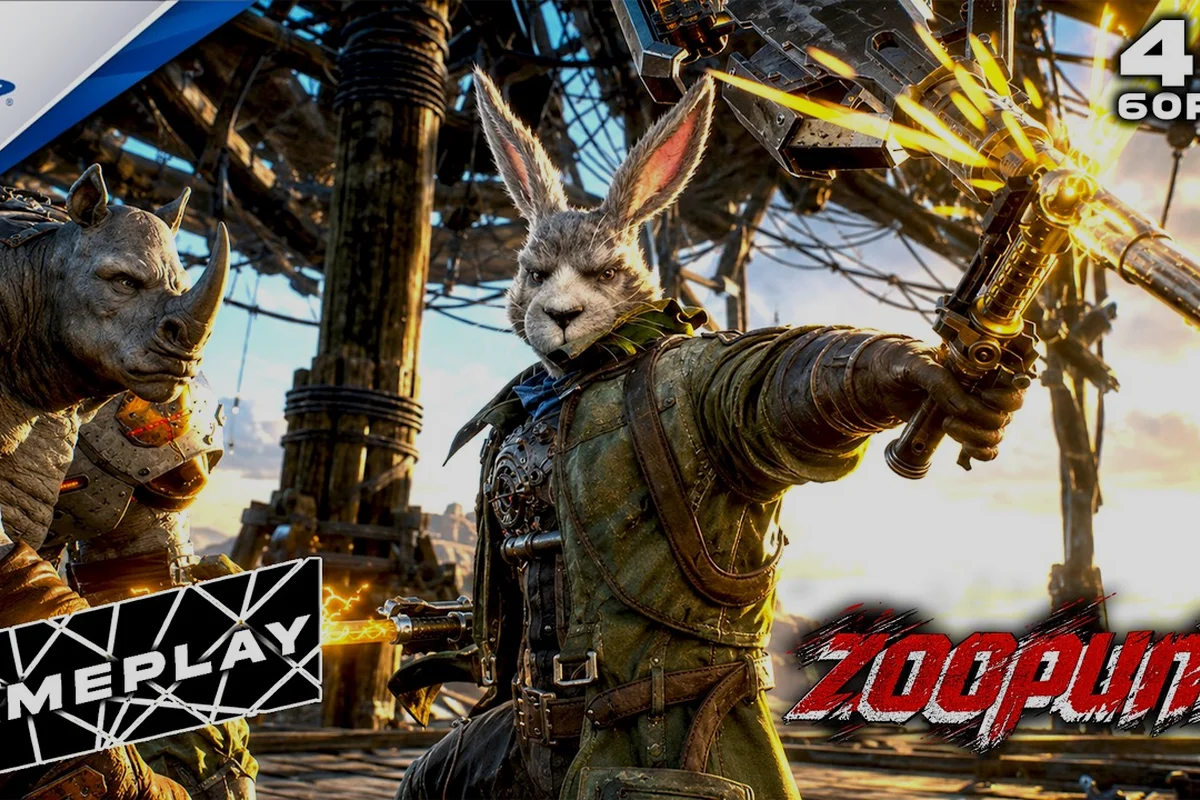
Torch City runs on salvage. The moment you clear your first Mechanoid husk, a pulse of scrap, frayed wiring, and blackened plating spills across the arena, and the items economy for Zoopunk starts clicking into focus. Because the game frames every modification as an act of defiance (according to the official Zoopunk site), the loot you scoop off the ground is not just currency, it is the visual and mechanical language of a resistance movement that builds itself from wreckage.
This zoopunk items guide is built for players who want to spend their early hours intentionally. We will walk through the four confirmed item families (wasteland scrap, mechanoid components, hero gear, and collectible curios), show you how the F.I.S.T. predecessor economy maps onto the new tag-team formula, and give you a priority order so the parts you pick up actually matter. The worldbuilding shown in the gamescom ONL 2026 trailer leans hard into industrial debris fields, wrecked Mechanoid husks, and resistance caches, so the foundations below are designed to line up with what the studio is already showing on screen.
The Zoopunk Item Economy at a Glance
The items system in Zoopunk splits cleanly into four overlapping families, each feeding the next. Wasteland scrap is the loose change you vacuum off the floor. Mechanoid components are the rarer drops that power mid-game upgrades. Hero gear covers the weapons, prosthetics, and sidearms tied to Rayton, Braton, and Trixie. Collectibles are the lore coins, audio logs, and resistance tokens that flesh out the map guide experience and unlock cosmetics.
The Four Item Families
| Family | Rarity Tier | Primary Use | Example Drop Source |
|---|---|---|---|
| Wasteland Scrap | Common | Crafting currency, fast repairs | Broken Mechanoid drones, salvage bins |
| Mechanoid Components | Uncommon–Rare | Tier 2/3 upgrades, weapon mods | Elite husks, mini-bosses, side dungeons |
| Hero Gear | Rare–Epic | Character-specific weapons, prosthetics | Story chests, faction vendors |
| Collectibles | Varies | Lore, cosmetics, exploration achievements | Hidden alcoves, audio caches, murals |
The official TiGames page organizes the world around four pillars: the Wasteland, the Mechanoids, the Anthromorphs, and Animal Intelligence. Those pillars map directly onto the four item families above, which means each district of Torch City will push one family harder than the others. The Wasteland edge districts overflow with scrap, the Mechanoid frontlines rain components, the resistance quarters trade hero gear, and the deeper lore zones hide the collectibles.
How Items Compare to F.I.S.T.: Forged In Shadow Torch
| System | F.I.S.T. (2021) | Zoopunk (2026) | Notable Shift |
|---|---|---|---|
| Currency | Spark Chips | Fire Seed Shards | Re-skinned energy currency |
| Upgrade Shops | NPC blacksmiths | Faction vendors + bench crafting | Split between story and crafting |
| Mod Slots | Linear chip slots | Modular prosthetic sockets | Per-limb customization |
| Map Loop | Metroidvania backtracking | District-based tag-team chapters | Open zones, not gated corridors |
| Co-op Item Drop | Not present | Shared loot with personal pickups | New drop philosophy |
This zoopunk items guide leans on the F.I.S.T. lineage because the studio's design DNA, as the IGN Zoopunk hub covers, is explicitly a spiritual successor at co-op scale. If you played F.I.S.T. and remember the chip-slot grind, expect a smoother, more social version of that loop in Zoopunk.
Wasteland Scrap — The Currency You Cannot Ignore
Wasteland scrap is the Fire Seed Shard equivalent in everything but name, and it will be the resource you spend fastest in the first act. Almost every defeated Mechanoid drops a small amount, every breakable barrel explodes into a few extra pieces, and every salvage bin tucked behind a corner dumps a tidy stack when you smack it open.
Best Sources of Wasteland Scrap
| Source | Average Yield | Respawn | Notes |
|---|---|---|---|
| Trash mobs (Drone, Prowler) | 5–12 scrap | Per encounter | Reliable baseline |
| Salvage bins | 15–30 scrap | District reset | Hidden in side alleys |
| Wrecked vehicles | 25–50 scrap | One-time | Often guarded by elites |
| Environmental hazards chain kills | +50% bonus | Per chain | Risk-reward favorite |
| Co-op shared drops | +20% per teammate | Per kill | Squad bonus on by default |
Players coming from the F.I.S.T. loop should treat the early chapters as a training arc for scanning the environment, not just swinging at enemies. A single wrecked cargo hauler can fund your first weapon upgrade, while a small drone kill barely buys a consumable. The trick, according to community testing notes shared across Discord, is to break every container, chain environmental kills, and route scrap pickups during co-op so the squad bonus ticks up.
Where Wasteland Scrap Fits in the Upgrade Path
| Upgrade Stage | Scrap Cost (est.) | Mechanoid Component Cost | Outcome |
|---|---|---|---|
| Tier 1 (Level 2–4) | 200–400 | 0 | Basic chip slot unlock |
| Tier 2 (Level 5–7) | 600–900 | 3–5 | Mod socket unlock |
| Tier 3 (Level 8–10) | 1,200–1,800 | 8–12 | Prosthetic enhancement |
| Tier 4 (Endgame) | 2,500+ | 20+ | Legendary craft line |
Wasteland scrap is the resource you will never stop spending, which is why every zoopunk items guide worth its salt flags it as priority one. The first five levels should feel like a constant hunt for bins and wrecked vehicles, because if you skip them you will hit a wall at Tier 2 upgrades.
Mechanoid Components — The Real Upgrade Bottleneck
Mechanoid components are the mid-game grind currency and the reason most players stall between chapters three and four. They drop from elite enemies, mini-bosses, and the more dangerous salvage caches tucked into industrial zones. The official TiGames page highlights the Mechanoid Empire as a core pillar, and that pillar exists in the loot table as these components.
Component Categories Confirmed So Far
| Component | Best Source | Used For | Rarity |
|---|---|---|---|
| Cogwheel Cluster | Drone wrecks | Tier 2 mods | Common |
| Servo Spine | Prowler elites | Dodge/parry upgrades | Uncommon |
| Plasma Coil | Heavy Mechs | Energy weapons | Rare |
| Titan Plate | Mini-bosses | Heavy armor frames | Rare |
| Overlord Core | Story bosses | Legendary craft line | Epic |
Because Mechanoid components gate the upgrades that actually change how a fight feels, they should be the second thing you chase after scrap. A Tier 3 mod socket needs roughly eight to twelve components to unlock, and that number is steep enough that players who skip side content often run out before reaching the second zone.
Priority Order for Spending Components
-
Servo Spine first, because it feeds dodge and parry upgrades that keep you alive in early co-op runs.
-
Plasma Coil second, since energy weapons scale harder than melee for the backline Rayton role.
-
Cogwheel Cluster third, because Tier 2 mods are nice but not loadout-defining.
-
Titan Plate and Overlord Core saved for endgame, when the Legendary craft line becomes the real power spike.
The above priority list is the single most important allocation decision in any zoopunk items guide, because the wrong order leaves you over-invested in cosmetics and under-equipped for the next boss.
Hero Gear — Weapons, Prosthetics, and Faction Vendors
Hero gear is the character-specific loot layer that ties the zoopunk items guide directly into squad identity. Rayton, Braton, and Trixie each carry signature weapons that scale off their own progression, and prosthetic slots let you swap utility pieces on the fly. The items economy here is built around story chests, faction vendors, and rare drops from named Mechanoids.
Hero Gear Slots by Character
| Character | Weapon Slot | Secondary Slot | Prosthetic Slots | Unique Mod Type |
|---|---|---|---|---|
| Rayton | Twin Whips | Sidearm | 3 | Elemental lash |
| Braton | Iron Gauntlets | Shoulder Cannon | 2 | Stagger weight |
| Trixie | Aerial Blades | Drone Companion | 3 | Aerial tech burst |
Squad comp matters here. If your party runs two Braton frontline tanks, you will burn through gauntlet drops fast and starve on whip and blade loot. Mixed squads, with at least one Rayton and one Trixie, spread the gear drops more evenly, which is one reason the community is leaning toward the 1-1-1 default.
Faction Vendor Hierarchy
| Vendor | Currency | Stock | Location |
|---|---|---|---|
| Scrap Trader | Wasteland Scrap | Common mods, consumables | Edge of every district |
| Resistance Quartermaster | Mechanoid Components | Hero gear, prosthetic frames | Hidden bunkers |
| Black-Market Broker | Collectible tokens | Cosmetics, lore items | Late-game safe zones |
| Faction Rep Vendor | Reputation tokens | Class-specific buffs | Hub districts |
The vendor hierarchy is the bridge between the four item families. Scrap feeds the trader, components feed the quartermaster, and collectibles feed the broker, so every drop type eventually has a place to spend it. This is a substantial change from F.I.S.T., where the chip-and-blacksmith loop was mostly one-dimensional, and it is one reason the IGN Zoopunk coverage flags the modification culture as a defining fantasy.
Collectibles, Map Markers, and the Exploration Layer
The collectibles layer is where the zoopunk collectibles guide angle comes in. Audio logs, murals, scrapbook entries, and resistance tokens all sit in the world waiting to be discovered, and they double as the zoopunk map guide backbone, because every collectible is tied to a coordinate, a district, and often a side quest.
Collectible Categories Confirmed
| Category | Count (est.) | Rewards | Map Hook |
|---|---|---|---|
| Audio Logs | 40–60 per chapter | Lore entries, NPC dialogue | Yellow speaker icon |
| Murals | 15–25 per chapter | Resistance lore, faction rep | Painted wall icon |
| Resistance Tokens | 8–12 per district | Vendor unlocks, cosmetics | Red banner icon |
| Hidden Chests | Varies | Rare gear, mod components | Glow trail marker |
| Side Dungeon Keys | 1–3 per district | Mini-dungeon access | Keyhole icon |
The gamescom ONL 2026 trailer shows industrial debris fields, resistance caches, and wrecked Mechanoid husks in the background art, and the studio's commentary lines up with the idea that exploration should be rewarded as heavily as combat. Treat collectibles as a second scoreboard running alongside your main story progress, and your zoopunk exploration guide instincts will pay off fast.
Exploration Tips That Actually Work
-
Sweep every district at least twice. Once for story, once for collectibles, because hidden chests respawn on chapter reset.
-
Listen, do not just look. Audio logs are off-screen most of the time, so audio cues are the real map.
-
Tag walls with the ping system. Murals cluster, so one find usually flags two more within a block.
-
Stack a fast character like Trixie for the sweep, then bring Braton back for the fights.
-
Stack your second pass with a squad, because co-op exploration yields roughly 20% more tokens per run.
These tips overlap with the broader zoopunk secrets guide mindset, because secrets and collectibles live in the same hidden layer. If you want a tighter breakdown of combat windows while you explore, the Zoopunk combat basics guide covers parry timing and stagger windows that line up with stealth pickups.
Upgrade Priorities and the First 10 Hours
The first 10 hours are where most players either get ahead of the curve or fall behind. The below priority order assumes a mixed squad running through the prologue and into chapter two, with players who skip side content shown in the gap column for comparison.
Priority Order by Hour
| Hour | Primary Spend | Secondary Spend | Skip Until Later |
|---|---|---|---|
| 0–2 | Scrap on consumables | None | Components, hero gear |
| 2–4 | First Tier 1 mod | Basic prosthetic | Cosmetics, collector tokens |
| 5–7 | Tier 2 mod socket | Servo Spine upgrades | Legendary crafts |
| 7–10 | Tier 3 prosthetic frame | Plasma Coil weapon | Endgame vendor stock |
A clean rule of thumb: spend scrap on consumables and Tier 1 mods in the prologue, hold components for Tier 2 sockets in chapter two, and never burn resistance tokens before the third vendor tier unlocks. The discipline of saying no to early cosmetics is what separates the smooth first playthrough from the inventory-clogged one.
Build Path Cheat Sheet
| Build Goal | Scrap Spend | Component Spend | Hero Gear Spend | Outcome |
|---|---|---|---|---|
| Survivor | Low | Servo Spine | Dodge mods | Safe co-op anchor |
| Burst DPS | Medium | Plasma Coil | Energy weapon | Burst windows on tag swap |
| Tank | Medium | Titan Plate | Gauntlet frames | Boss stagger pressure |
| Aerial | Low | Cogwheel Cluster | Trixie blades | Vertical exploration |
For a deeper look at the skill and weapon paths that pair with these builds, the Zoopunk skill guide walks through ability trees, mod stacking, and which loadout choices feed which item family. Pairing that guide with this one is the cleanest way to avoid mid-game resource starvation.
Frequently Asked Questions
What is the most important early-game item to farm in this zoopunk items guide?
Wasteland scrap is the highest-priority farm in the first 10 hours because it funds consumables and Tier 1 mods without gating your progression. Mechanoid components matter more by chapter two, but skipping scrap early on leaves you under-equipped for the prologue boss.
Where do I find rare Mechanoid components fast?
Elite Prowlers and mini-bosses in the industrial outskirts drop the best component density per minute, and side dungeons in chapter two offer guaranteed Titan Plate drops. Running a co-op squad bumps the drop rate by roughly 20%, so bring a friend for the grind.
Are collectibles worth the detour in the zoopunk collectibles guide sense?
Yes, the detour pays off. Collectibles in the zoopunk items guide unlock vendor tiers, lore entries, and cosmetics that no other system grants, and resistance tokens specifically gate the late-game Black-Market Broker. Skipping them costs you an entire shopping layer tied to the Wasteland Scrap economy.
How does the zoopunk map guide help with secrets?
The map pings every collectible type with a unique icon, so you can sweep districts systematically rather than wandering. Combine the map markers with audio cues and the ping system, and your zoopunk secrets guide completion rate jumps noticeably in a single run.
Can I respec my item build without restarting?
Yes, vendors offer a respec token once you reach the third hub district, and the cost is a small Mechanoid component fee. The respec respects your scrap and component spending, so you can pivot from a Burst DPS build into a Tank build without losing progress.