
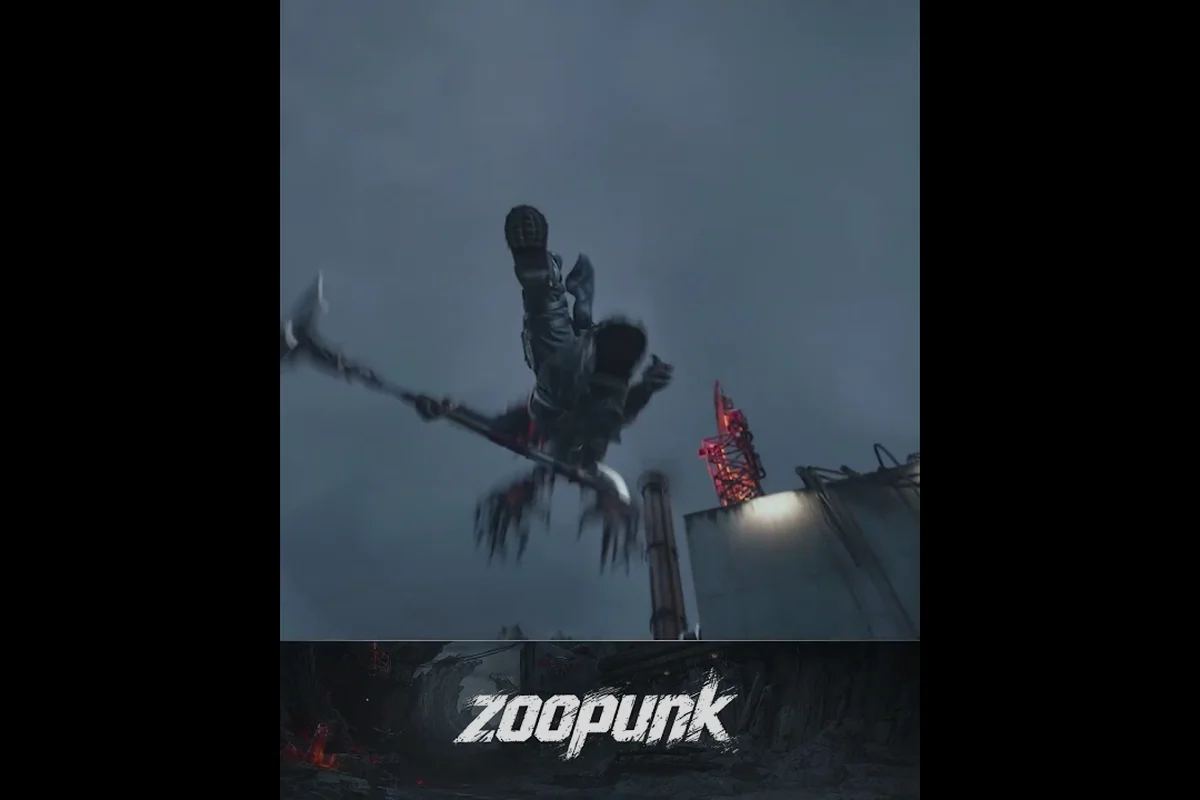
Zoopunk anthropomorphic animals lore is the single biggest reason this dieselpunk action game feels different from every other anthropomorphic title on the market. TiGames has built Torch City as a place where animal folk with human-level reasoning share streets with cold mechanical occupiers, and the result is a setting where species identity, body modification, and wartime history all collide in ways that directly shape the combat you play. Get the full breakdown of which factions exist, why they fight, and how the lore connects to F.I.S.T.: Forged In Shadow Torch below.
The Anthromorph Condition — Half Heartbeat, Half Gear
Before we can name a single faction, we need to understand what an anthromorph actually is inside the Zoopunk universe. The studio's official pillars describe the animal folk as beings who possess human reasoning while also carrying industrial body modifications — and that fusion of biology and machinery is the central philosophical idea the entire story orbits around. The official site frames it bluntly: heartbeats have been replaced by gears, while primal instinct and mechanical reason are intertwined rather than opposed.
Body Mods as Cultural Identity
In Torch City, the choice of modification is not cosmetic — it is a declaration of who you are and what role you play in the underground. A rabbit scout who bolts a compressed-air grapple onto her forearm is signalling mobility, range, and trust in tech over muscle. A heavyweight bruiser who welds a hydraulic exoskeleton onto a bear frame is signalling the opposite: that raw power and shock absorption matter more than finesse. The lore treats mods as species-coded loadouts, which is why the heroes' visual design and their combat kit line up so tightly. The animal body sets the silhouette, and the modifications finish the silhouette into a role.
Heartbeats vs. Gears as a Story Engine
Every major story beat in Zoopunk plays on the same tension: an anthromorph's heartbeat says run, hide, survive — but the gears bolted into that same body say fight, upgrade, push back. The narrative uses this duality to explain why animals who should logically have fled the city instead pick up weapons against the mechanoid empire. It is not bravery in the human sense; it is a mechanical compulsion written into the body mods themselves. According to the studio's own positioning, the anthromorph condition is the series' defiance-of-fate thesis — the moment a character chooses to fight is the moment their mods and their instincts finally agree.
The Three Flagship Factions and What They Fight For
Torch City is not a monolith. The animal folk are split into factions whose species identity, home territory, and combat doctrine have been shaped by decades of coexistence with the mechanoid occupiers. These factions are the most important organizational layer underneath the individual heroes, and they are the unit most players will recognize on sight.
Faction Roles at a Glance
| Faction | Core Species | Combat Doctrine | Body Mod Signature | Lore Role |
|---|---|---|---|---|
| Rabbit Scout Clans | Rabbit | Recon, range, evasion | Light compressed-air gear | Forward intelligence, opener strikes |
| Bruiser Lodges | Bear, Bull, Boar | Frontline tanking, stagger | Heavy hydraulic exoskeletons | Hold chokepoints, absorb aggro |
| Avian Tech Collectives | Owl, Crow, Falcon | Aerial support, gadgetry | Rotor modules, sensor suites | Zone control, tech disruption |
Rabbit Scout Clans — Speed, Eyes, and Survival Instinct
The rabbit clans are the smallest-bodied and the most mobile anthromorphs in the city, and the lore treats that combination as a strategic asset rather than a weakness. Scouting before the bruisers commit is the rabbit clans' historical job, which is why the studio's material lists rabbit folk as the species that best fits the scout archetype. Rayton, the returning protagonist from F.I.S.T., carries that tradition forward with twin whips and a body that prefers to strike from range before disengaging. The rabbit clans' lore is essentially the lore of "we see it first," and that is why their modifications always emphasize optics, range, and quick escape tools.
Bruiser Lodges — The Ones Who Hold the Line
Bruisers are the faction the city cannot survive without, and their lore is written around one simple fact: somebody has to be in front when the mechanoid line charges. Bears, bulls, and boars anchor the bruiser lodges, and the official material describes them as heavy-set in both silhouette and playstyle. The hydraulics welded to their frames are not show pieces — they are the practical difference between a chokepoint that holds and a chokepoint that breaks. Braton, the iron-fisted veteran, embodies the bruiser code: stand still, take the hit, swing back twice as hard. Zoopunk why animals fight machines often gets answered with the bruisers first, because their mods literally exist to absorb what the mechanoids throw.
Avian Tech Collectives — The Air Above the Street
The avian collectives exist because the other two factions cannot solve every problem from the ground. Owls, crows, and falcons run the rotor-equipped wingsuits and sensor suites, and the lore gives them a specific strategic job: control the airspace, spot what ground troops miss, and disable enemy tech before it fires. IGN's coverage of the game describes avian characters as tech specialists whose species identity informs both faction culture and combat role. Trixie, the aerial wildcard, sits at the head of that tradition. Her mods are not designed to win a brawl — they are designed to make sure the brawl never starts on the enemy's terms.
Torch City Origins — A Wasteland Rebuilt Around Fire Seed Energy
Zoopunk torch city origins are inseparable from the mechanoid war, and the lore gives the city a layered history that the game expects players to pick apart as they go. The animal folk did not always live under occupation; they built Torch City themselves, around a resource the studio calls fire seed energy, and the mechanoid empire arrived as a conquering force that wanted that resource for itself.
Timeline of the City
| Era | Power Holder | Defining Event | Lore Significance |
|---|---|---|---|
| Pre-War Era | Animal Factions | Founding of Torch City around fire seed energy | Establishes anthromorph self-rule |
| First Torch War | Animal Factions vs. Mechanoid Empire | Open conflict over fire seed reserves | Forces unification, births the heroes |
| Occupation Era | Mechanoid Empire | Animal folk pushed into underground resistance | Body mods become survival gear |
| Present Day | Resistance Cell | Open revolt resumes | Heroes take the fight back to the surface |
Why Fire Seed Matters to Anthromorph Identity
Fire seed energy is not just fuel in the lore — it is the resource the mechanoids invaded for, which means every anthromorph who lives in Torch City is, by definition, sitting on top of what the empire wants. The official narrative angle, drawn from the studio's lore pillars, frames the city's animal residents as a population whose survival is incompatible with surrender. That is the historical reason animal folk fight machines in Zoopunk: they are not fighting a war of choice, they are fighting a war of necessity because the empire considers them a problem to be solved, not a people to be negotiated with. For a deeper walkthrough of the city's foundational events, the Zoopunk plot summary lays out the same eras with more detail on each named conflict.
F.I.S.T. Timeline Placement and Returning Characters
Zoopunk fist timeline placement is one of the most-searched lore questions on the internet right now, and the studio has been deliberate about giving just enough to confirm the connection without spoiling the new story. The game shares its city, its species, and at least one of its leads with F.I.S.T.: Forged In Shadow Torch, which makes a direct link impossible to miss for anyone who played the first title.
What Carries Over From F.I.S.T.
| Element | Status in Zoopunk | Source of Confirmation |
|---|---|---|
| Torch City | Same setting, post-war state | Official site lore pillars |
| Rayton (Rabbit) | Returning playable hero | IGN coverage of the roster |
| Anthromorph species | Same species list, expanded roles | TiGames official pillars |
| F.I.S.T. story beats | Referenced, not retold | Studio press positioning |
The "Prequel vs. Sequel" Question
Community discussion and pre-release interviews make it clear that Zoopunk is a continuation of the F.I.S.T. universe rather than a hard reboot, and the placement works like this: Torch City and the anthromorph species are inherited wholesale, the First Torch War is referenced as historical context, and at least Rayton returns as a frontline hero. Whether the new game is a strict sequel, a parallel-story prequel, or a soft interquel depends on which trailer frame you trust most, and the studio has avoided locking the answer. For players who want every confirmed carryover spelled out, the Zoopunk F.I.S.T. recap collects the lore beats that have actually been verified.
Returning Characters Beyond Rayton
Rayton is the headline return, but the lore implies other F.I.S.T. characters will resurface in some form. Community datamines reported by players suggest at least one more name from the first game appears in environmental storytelling, voice logs, or NPC cameos, and the studio has confirmed that Torch City is the same city in both games, which means every location that mattered in F.I.S.T. is still on the map. Zoopunk returning characters from fist are therefore less of a question and more of a checklist — the city is back, the species are back, and the studio has promised that the emotional throughline carries forward even when the playable cast rotates.
Easter Eggs for F.I.S.T. Fans — What To Watch For
Zoopunk easter eggs for fist fans are not a side feature — they are part of how the studio rewards players who paid attention to the first game. The lore drops are layered so that a brand-new player can read the world on its surface terms, while a returning F.I.S.T. player picks up half a dozen extra references in the same scene.
Confirmed and Likely Easter Egg Categories
| Easter Egg Type | Where to Look | What It Confirms |
|---|---|---|
| Location callouts | District names, signage | Torch City districts from F.I.S.T. |
| Prop redesigns | Weapons, signs, posters | Visual continuity between games |
| NPC cameos | Side characters, voice logs | Returning minor cast from F.I.S.T. |
| Combat callouts | Rayton's voice barks | Carryover of F.I.S.T. personality |
| Audio motifs | Background music stings | Shared composer themes |
Reading the Wasteland as a Storyteller
The single most important lore-reading skill in Zoopunk is environmental storytelling. The official site positions the animal folk as a population whose industrial body mods double as historical records, because each generation of mods reflects the threat that generation actually faced. A corroded hydraulic arm on a statue in the eastern district means the bruisers took heavy losses there. A fresh sensor suite bolted to a bridge means the avian collectives only just reclaimed that airspace. Players who treat the city as a museum rather than a backdrop will pick up lore faster than any quest log can deliver it. The hidden lore details guide walks through the same districts with that exact reading approach.
The Zoopunk TiGames Universe and Why It Matters
Zoopunk tigames universe is more than a developer credit — it is the connective tissue that explains why a Chinese studio's second major release leans so hard into dieselpunk worldbuilding, mechanical enemies, and animal heroes. TiGames has positioned both F.I.S.T. and Zoopunk as parts of a single creative arc, and the studio's lore pillars make it clear that the anthromorph condition, the mechanoid threat, and the theme of defiance are deliberately shared across titles rather than reset between them.
What the Studio Has Stated
| Lore Pillar | Studio Position | Player Implication |
|---|---|---|
| Anthromorphs | Human reasoning, industrial mods | Species = role, mods = identity |
| Mechanoids | Occupying empire, cold logic | Antithesis to anthromorph instinct |
| Wasteland | Torch City, post-war setting | Environmental storytelling central |
| Animal Intelligence | Civilizational, not feral | Why anthromorphs build, plan, fight back |
| Heroes | Squad-based, role-defined | Co-op framing rooted in lore |
The Shared Defiance-of-Fate Thesis
Both F.I.S.T. and Zoopunk circle the same thematic question: what does it mean for a being with human reason and animal instinct to be told its place is to be replaced? The studio's narrative pillars describe the anthromorph condition as a rebellion written into the body — every hydraulic fist, every rotor wing, every sensor suite is a small refusal to accept extinction. Zoopunk extends that thesis by asking what happens when the rebellion stops being small. The result is a game where the lore is not background dressing; it is the literal reason the heroes are swinging. For a closer look at how the F.I.S.T. ending feeds into the new timeline, the Zoopunk prequel story analysis maps the connections the studio has confirmed.
Putting the Lore to Work in Your Squad Runs
Lore is most useful when it changes the way you play, and Zoopunk's faction design deliberately lets the species' storytelling shape the squad's combat behavior. Players who treat the lore as a strategy document rather than flavor text will pick up advantages that are not written in any tooltip.
Quick Application Table
| Faction Trait | Squad Application | Mechanic It Connects To |
|---|---|---|
| Rabbit scout speed | Open engagements, then disengage | Dodge windows, i-frames on swap |
| Bruiser stagger power | Hold aggro during burst windows | Stagger meter, break combos |
| Avian aerial control | Zone denial, add management | Aerial combos, tech interrupts |
| Faction unity | Swap chains across species | Tag team assist windows |
Why the Heroes' Stories Match Their Kits
Every playable hero in Zoopunk is built so that their combat kit is a compressed version of their faction's lore. Rayton's twin whips are the rabbit scout tradition of "strike from range, then leave." Braton's iron fists are the bruiser code of "absorb, then punish." Trixie's aerial tech is the avian doctrine of "control the airspace before the brawl starts." When you swap heroes mid-fight, you are not just cycling cooldowns — you are rotating through the three faction doctrines the underground resistance was built on. That is why the tag-team system feels coherent rather than random: the lore is the loadout.
What Experienced Lore Readers Do Differently
Players who have already memorized the F.I.S.T. timeline tend to read Zoopunk's first hour very differently. They look for location callouts that confirm which districts survived the war, NPC dialogue that names dropped characters from the first game, and prop design that signals which species still controls which territory. That kind of reading turns a 20-hour playthrough into a layered archaeology session, and it is the closest thing the game offers to a second playthrough reward before you even hit New Game+. The official Zoopunk on TiGames site is the cleanest source for the lore pillars that anchor all of this reading, and the studio's narrative-focused official site extends the same pillars with the philosophical framing the in-game text only hints at.
Frequently Asked Questions
What is Zoopunk anthropomorphic animals lore in one sentence?
Zoopunk anthropomorphic animals lore is the story of a Torch City population called anthromorphs — animal folk with human reasoning and industrial body mods — who fight the mechanoid empire because their city is built on the fire seed energy the empire wants to seize.
How does Zoopunk fit into the F.I.S.T. timeline?
Zoopunk shares its setting, its species, and at least one returning lead (Rayton) with F.I.S.T.: Forged In Shadow Torch, and the studio positions it as a continuation rather than a hard reboot, though the exact in-universe placement is still being confirmed by community tracking.
Why do the animal factions fight the mechanoids?
The animal factions fight the mechanoid empire because the machines invaded Torch City to seize its fire seed energy reserves, threatening the anthromorph home the factions rebuilt after the First Torch War. Historically divided rabbit scouts, heavy bruiser lodges, and avian tech collectives were forced into a unified underground resistance to reclaim their wasteland.
Which F.I.S.T. characters return in Zoopunk?
Rayton is the only confirmed returning playable hero from F.I.S.T.: Forged In Shadow Torch, carrying his fire seed energy combat style into the new mechanoid conflict. Other Torch City names surface as NPC cameos, voice logs, and environmental storytelling throughout Zoopunk's districts, rewarding lore-focused players who rewatch old F.I.S.T. footage to spot callbacks hidden in the anthromorph faction hubs.
What is the Zoopunk TiGames universe?
The Zoopunk TiGames universe is the studio's shared creative arc that includes F.I.S.T. and Zoopunk as continuous entries built on the same lore pillars: anthromorphs, mechanoids, wasteland settings, animal intelligence, and heroes whose defiance is written into their body mods.